Starship Succeeded
For the most part!
By: Ben Thomas 5/25/2026
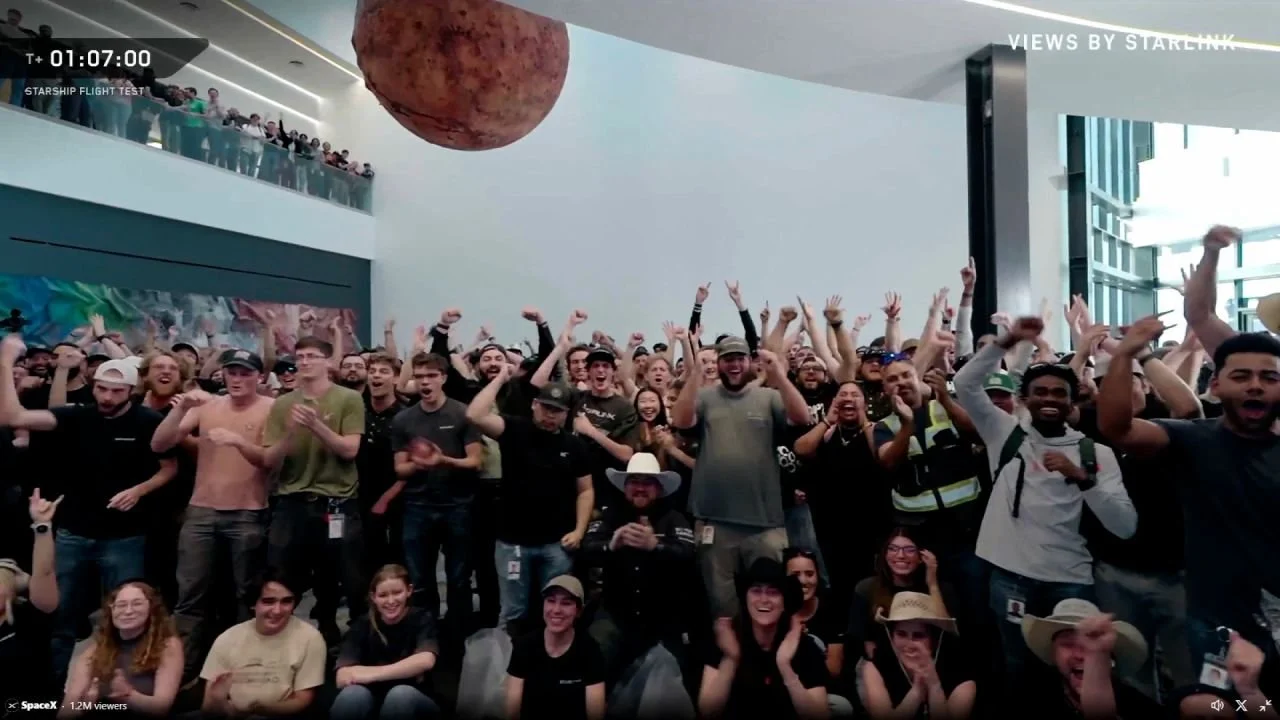
SpaceX Team cheering after the Starship landed in in the Indian Ocean Successfully
Me in front of the Launch pad in 2022 with “Texas” the horse.

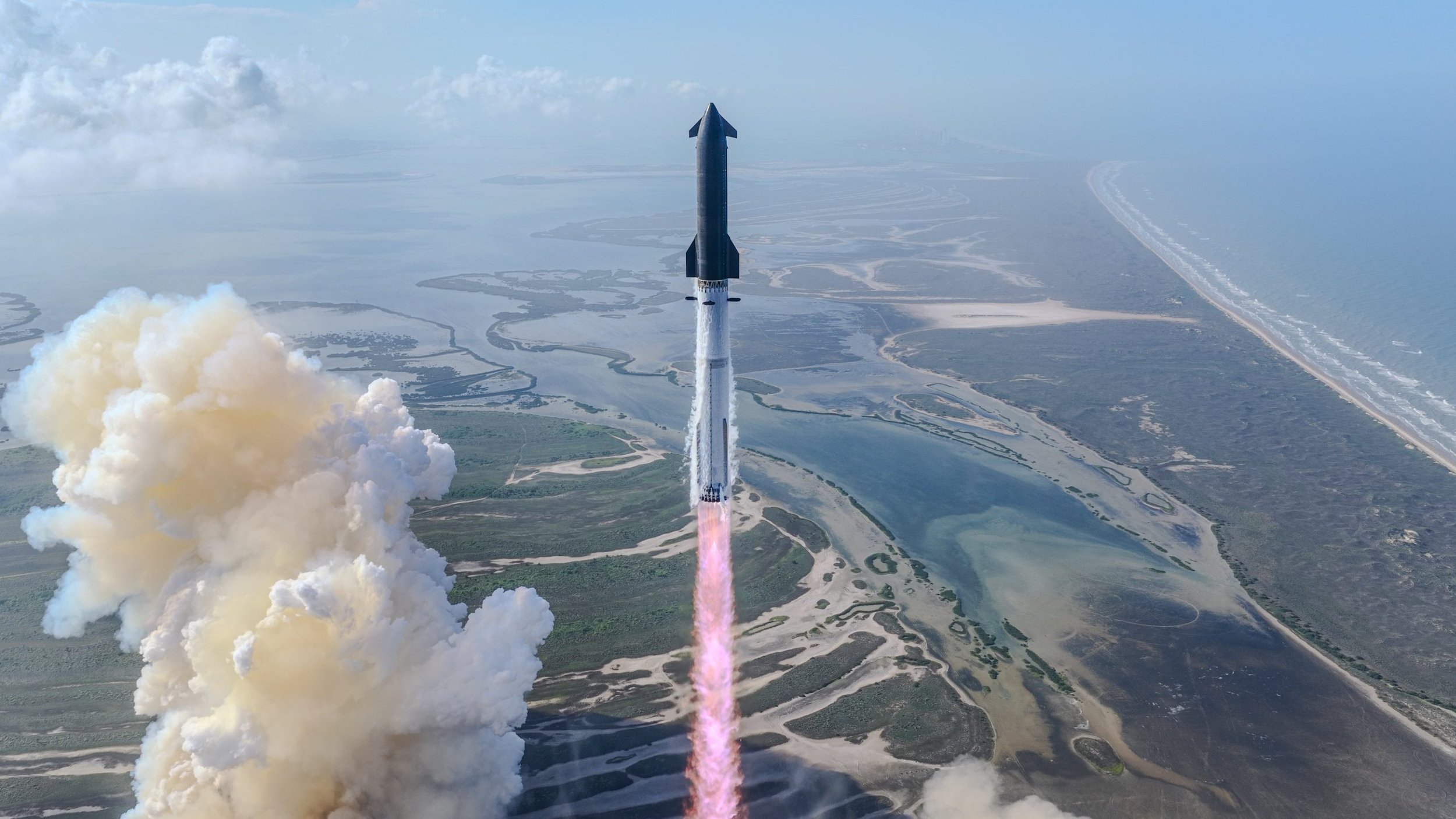
SpaceX Starship Flight 12: A Big Step Toward the Future
On May 22, 2026, SpaceX successfully launched Starship Flight 12, the first test flight of its new and more powerful Starship Version 3 rocket. Standing about 408 feet tall, it is the largest and most powerful rocket ever built.
The mission was designed to test new upgrades that will eventually help make space travel cheaper and more reliable. During the flight, the rocket successfully reached space, deployed test satellites, and survived its fiery return through Earth's atmosphere. The upper-stage Starship then completed a controlled splashdown in the Indian Ocean.
Not everything went perfectly. One engine shut down during flight, and the booster did not complete its planned return maneuver. However, engineers consider the mission a success because most major objectives were achieved and valuable data was collected for future flights.
Why does this matter? Starship is the rocket that could carry astronauts back to the Moon through and eventually transport people and cargo to Mars. Flight 12 showed that SpaceX is getting closer to making reusable, large-scale space travel a reality.
In one sentence: Starship Flight 12 proved that the next generation of SpaceX's giant rocket can successfully reach space and return safely, bringing humanity one step closer to the Moon, Mars, and a future where space is more accessible than ever. 🚀
In the next blog we will go over the total addressable market this cost revolution brings and what it could mean for high school kids and their future careers.
Starship with all new Version 3 hardware. Launch 5/22/2026
The Importance
of SpaceX Starship for High School Students
By: Ben Thomas 4/26/2026

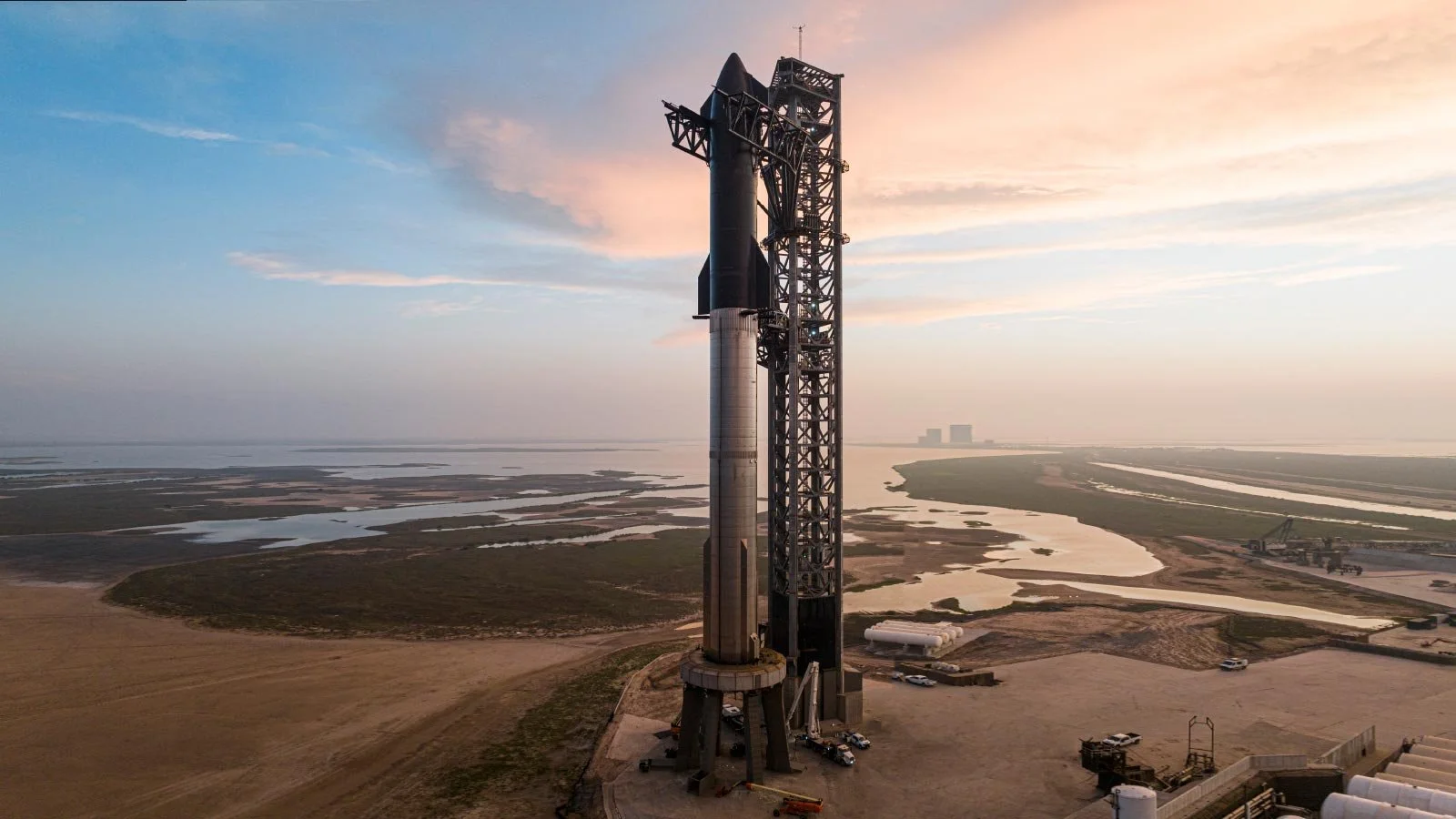
Ben Thomas with his family in front of SpaceX launch Complex in 2022 before the very first Lauch of Starship.
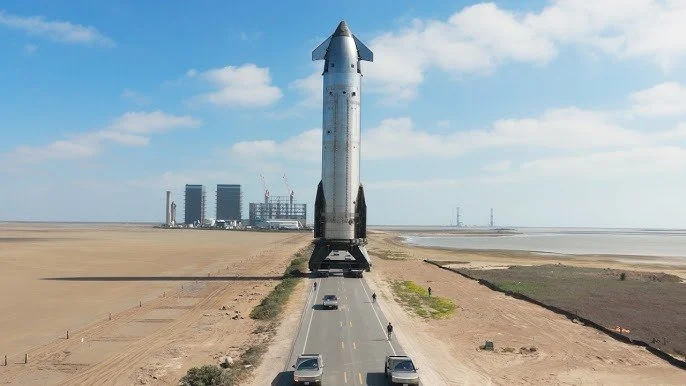
Starship Flight 10 - August 2025
The Democratization of Space: Atoms vs. Electrons
Why SpaceX’s Starship Could Shape the Careers - and Futures - of Today’s Students
By Ben Thomas
A few weeks ago, SpaceX tested Starship, the most powerful rocket ever built, as part of its plan to make space travel dramatically cheaper and more accessible. While rockets exploding or landing might seem like something only engineers care about, Starship could actually have a huge impact on the future of jobs and industries. If it works as intended, it could open up space to far more people and companies than ever before and that could change what today’s students should be preparing for.
For a while now, students have been told that a straightforward way to be successful is going into the tech sector. Learning how to code, making apps and working in software became the main focus of millions of students and professionals alike. “Learn to code” was the advice aspiring professionals heard for years.
But now, things are starting to change. With artificial intelligence improving, it is beginning to take over parts of coding and software jobs. For example, recent research shows that about 41% of all code is now AI generated or AI assisted. Because of that, the vision of the future of jobs might not just be about computers and software anymore but more about building tangible products, machines, energy systems and even space technology.
You could think of it like this. For a long time, the focus was on electrons, meaning software and digital systems. Now, there is a shift back toward atoms, meaning the physical infrastructure that actually builds and powers the world.
One place where this shift is clearly happening is space, especially with SpaceX’s Starship. This rocket is not a marginal upgrade in rocketry. It could completely change how humans use space. In the past, sending something into space was incredibly expensive. It used to cost tens of thousands of dollars to send a single kilogram into orbit during the Space Shuttle era in the 1980s-2000s, when launches were expensive and rockets were not reusable. Even newer rockets cost a few thousand dollars per kilogram. But Starship, being fully reusable, could lower that cost to under $100 per kilogram. That is not just a small improvement. That is about a 99% drop in cost.
NASA’s Space Shuttle used to cost over $50,000 just to send one kilogram into space. Newer rockets brought that down to a few thousand dollars. Starship could lower it to under 100 dollars per kilogram, which is kind of crazy to think about.
And when a service gets that much cheaper, it means a lot more individuals or groups can actually use it, boosting a host of new industries.
We have seen the same process before. When computers got cheaper, the internet exploded with new companies and ideas. The same thing could happen with space. If it becomes way more affordable to launch cargo and people, more companies will start investing in space.
Some of this is already starting. There are companies trying to manufacture medicine in space because zero gravity creates unique opportunities for pharmaceutical research, including advances in protein crystallization, in molecular modeling, and in complex biological studies. Others are working on space based solar energy or satellites that track climate change. And what is interesting is that these companies do not just need engineers. They need people in business, marketing, law, finance and more.
That is why this matters for students like us. The space industry is not just for astronauts or rocket scientists anymore. It is becoming a whole ecosystem where physical systems and digital technology come together. Everything that exists on Earth will translate in some form to an industry in space.
SpaceX is a robust good example of that. Even though its pioneering reusable rockets get most of the glamor, one of its biggest businesses is Starlink, which provides internet through satellites. According to reported S-1 filing figures, Starlink acts as the financial anchor for SpaceX, generating $11.39 billion in 2025 revenue and accounting for 61% of total sales, making it the company's sole profitable segment. That shows how space companies are not just about launching things. They are building long term services that people use every day.
There is also a growing connection between space, energy and artificial intelligence. Right now, AI systems on Earth use a huge amount of electricity and generate a lot of heat, which makes them expensive and hard to manage. Some think that in the future, data centers could be built in space, where there is constant solar energy and better ways to deal with heat. That idea might still be far off, but it shows how space could help solve real problems on Earth.
Of course, there are still big challenges. Space technology is expensive and complicated. There are issues like space debris, government regulations and competition between countries. Not everything is going to work out, and some ideas might take much longer than expected.
But that is how exploration has always worked. There is always risk, and progress does not happen overnight.
For students today, the takeaway is pretty simple. If you want to be on the cutting edge of the labor market and economy, do not only prepare for the digital world. It’s still important, but it is not the only path anymore. The future may also depend on people who can engineer and create real systems and infrastructure, not just code.
In the past, explorers pushed the limits of what was possible on Earth. Now, space is the next frontier. What used to feel like science fiction is starting to feel real.
For the generations of today and tomorrow, space might not just be something we learn about in school. It could actually be something we help build, which is honestly pretty exciting.